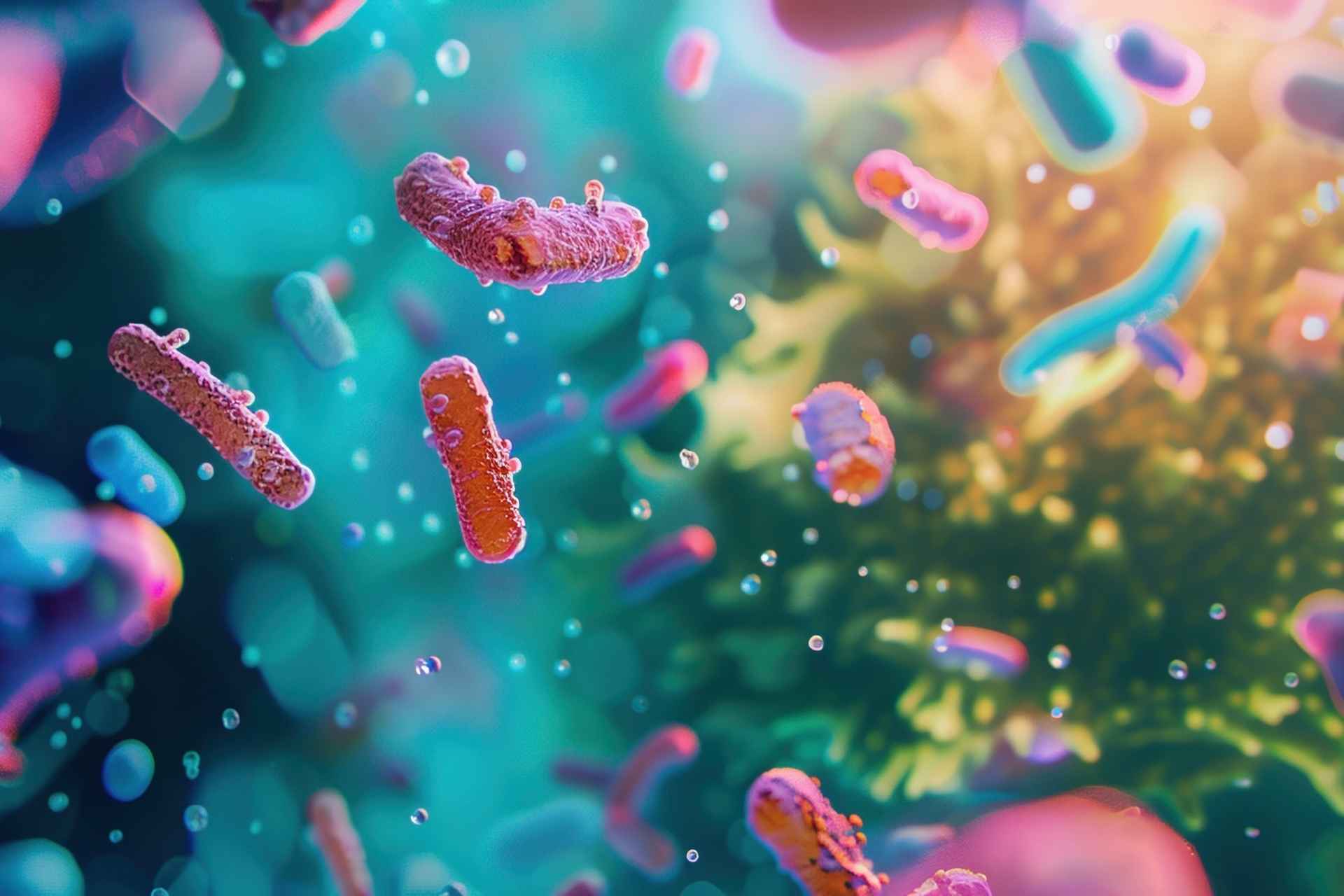
Infant gut microbiome imbalances may raise type 1 diabetes risk through age-dependent changes in bacterial-modified bile acids. Some bile acids decrease while others rise and stabilise, reflecting microbiome maturation while genetically at-risk children show distinct patterns.
This study, published in Nature Communications mapped early-life patterns of microbial conjugated bile acids (MCBAs) and their connection to islet autoimmunity.
Bile acids (BAs), derived from cholesterol and produced in the liver, play crucial roles in lipid absorption and signaling in the gut. They are modified by gut microbes into a variety of secondary BAs, with a significant portion recirculated to the liver through enterohepatic circulation. Recent findings indicate that gut microbes can also reconjugate BAs, leading to the identification of MCBAs. These compounds interact with various receptors, influencing metabolism and immune responses. Dysregulated BA levels are linked to several diseases, including type 2 diabetes and inflammatory bowel disease.
This longitudinal study aims to explore the trajectories of MCBAs in relation to islet autoimmunity and type 1 diabetes of children (n= 74, 3-36 months) through collection of stool samples (n=303). The study focuses on children who developed multiple autoantibodies, single autoantibodies, and those who remained negative for autoantibodies, as well as the interplay between MCBAs and gut microbiota.
A total of 110 MCBAs were examined, revealing how:
- 78 present in at least one sample, with primary bile acids (CA, Chenodeoxycholic Acid, CDCA) being more prevalent than secondary (Deoxycholic Acid, DCA; Ursodeoxycholic Acid, UDCA; Hyodeoxycholic Acid, HDCA)
- Various factors influenced MCBA profiles being the age the primary determinant affecting 48 MCBAs
- After the first year, primary BA amidates declined, while secondary BA amidates increased, stabilizing or slightly decreasing by 24 to 36 months. Different trends were noted for HDCA conjugates, with some decreasing and others increasing with age.
- Nine MCBAs differed by sex, and three were associated with breastfeeding duration, indicating the complexity of early-life bile acid metabolism
MCBAs and islet autoimmunity
Concentrations of ten MCBAs differed significantly between children who developed islet autoantibodies (P1Ab and P2Ab groups) and the controls. Notable findings include:
- Lower DCA conjugates in the P1Ab group compared to controls, while CDCA-Tyr showed an opposing trend
- Different age cohorts demonstrated inconsistencies in MCBA profiles across time points, yet specific conjugates remained significantly altered, with only UDCA-Asn consistently lower in the P2Ab group at 12 months
- Bacterial communities correlated with altered BA profiles, especially DCA conjugates, identifying 72 bacterial strains with associations to these metabolites, such as Eubacterium eligens and Bacteroides fragilis. Indeed, numerous microbial strains were found capable of producing specific MCBAs, supporting the role of gut bacteria in BA metabolism and their potential influence on islet autoimmunity development.
MCBAs modulate host immune responses
MCBAs were investigated for their immunomodulatory effects on the innate immune system, focusing on responses to lipopolysaccharide (LPS) in human whole blood cultures showing:
- Various bile acid conjugates displayed different impacts on LPS-induced signaling pathways downstream of the TLR4 receptor, with unconjugated UDCA and certain conjugates inhibiting signaling, while others enhanced it
- Examining the effects of MCBAs on the adaptive immune system during the differentiation of Th17 and iTreg cells it was showed how UDCA-Asn and CDCA-Ser promoted Th17 differentiation and IL-17a secretion, while inhibiting iTreg cell differentiation
- Unconjugated UDCA and CDCA-Tyr did not affect iTreg populations but reduced IL-17a secretion, inhibiting Th17 differentiation
- RAR-related orphan receptor alpha (RORα) expression in Th17 cells appeared to correlate with IL-17A levels following treatment with these MCBAs, indicating a potential role in bile acid-mediated modulation of immune responses
To summarise, this study track microbially conjugated bile acids through early childhood, revealing their key role in islet autoimmunity development. Not only. These gut bacteria-modified bile acids strongly correlate with microbiome composition and actively shape the balance between pro-inflammatory Th17 and regulatory Treg immune cells — positioning MCBAs as crucial influencers of immune development.
 Latest related content