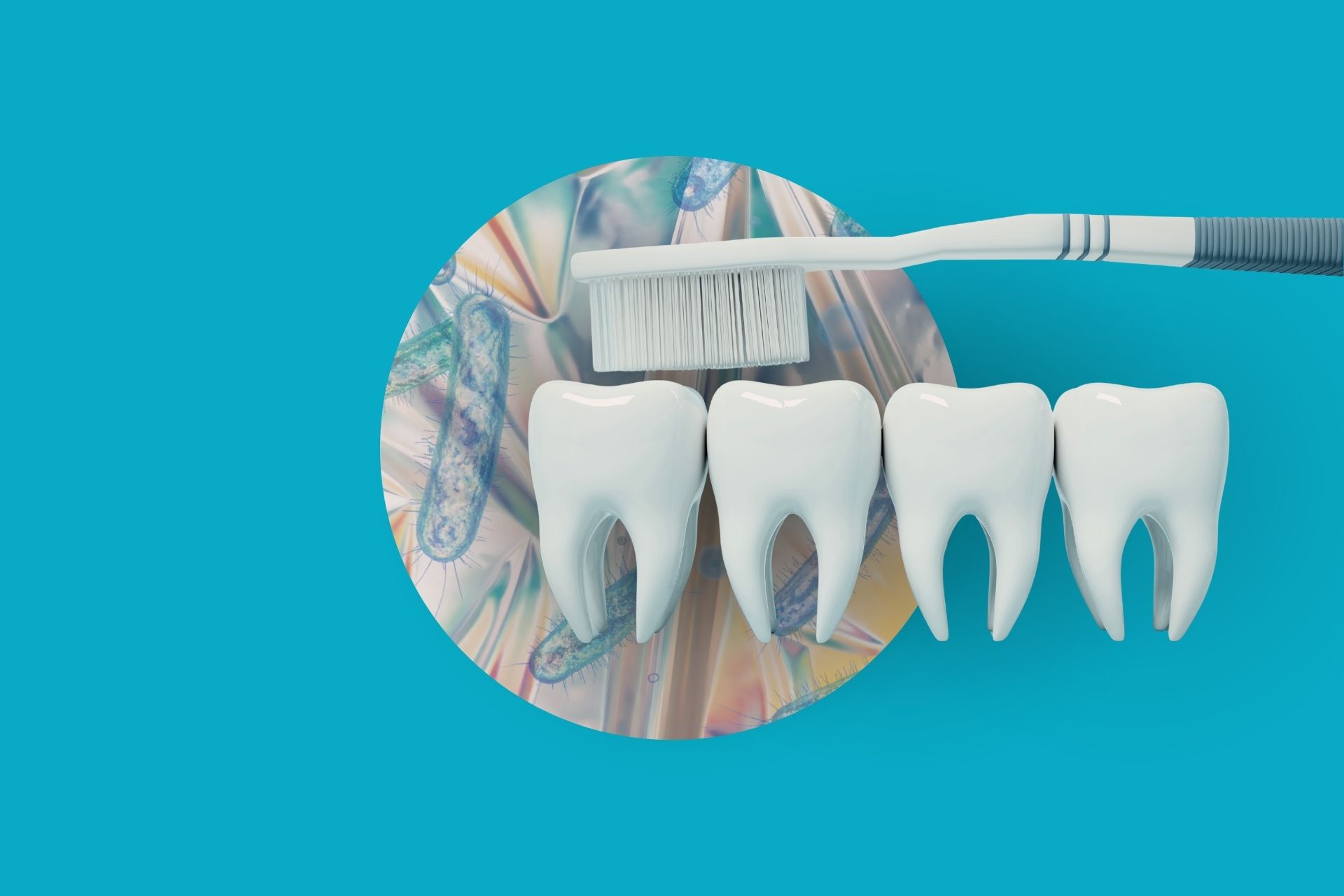
There are more than seven hundred species living in your mouth at this moment. Emerging research suggests they may carry information about your cardiovascular risk, your metabolic health, and possibly your susceptibility to cognitive decline, though much of this evidence remains at an early stage. What is not in doubt is that we have spent a century trying to kill them. That, in a single sentence, is the central absurdity of modern oral health.
For generations, one might say, we carpet-bombed the mouth with antiseptic mouthwash, marketed sterility as hygiene, and constructed entire health systems around the assumption that the oral cavity was a plumbing problem, disconnected from the rest of the body. The science is now telling a story so different that it borders on the embarrassing. These microbial communities regulate acidity, protect enamel, and perform a function that is only recently being understood at the mechanistic level: they convert dietary nitrate into nitric oxide, the molecule that controls blood vessel tone and blood pressure. A 2025 study from the University of Exeter, published in Free Radical Biology and Medicine, demonstrated this directly. When older adults drank nitrate-rich beetroot juice twice daily for two weeks, their oral microbiome shifted: harmful Prevotella declined, beneficial Neisseria increased, and blood pressure fell. The mechanism ran through the mouth. Destroy those bacterial communities with aggressive mouthwash and one interrupts the nitrate-nitric oxide pathway. Blood pressure rises. Periodontal dysbiosis has also been associated, in observational studies, with cardiovascular events and diabetes complications. A growing body of research is investigating possible links to neurodegenerative conditions, though causal pathways remain to be established. The mouth was never a silo. It was a sentinel. We treated it like the extremity of a tube.
And within the mouth, there is a surface that strikes me as the most overlooked diagnostic site in the human body: the tongue. Its dorsum hosts dense, structured bacterial communities organised in complex biofilms, and these communities are not passive. They are a primary site for the nitrate-nitrite-nitric oxide pathway that the Exeter study exploited. A 2026 study published in npj Biofilms and Microbiomes classified tongue microbiota from 729 individuals into three distinct orotypes, each associated with different metabolic and oral health outcomes, with temporal stability observed over six years. Separately, research has linked tongue microbiome alterations to conditions ranging from rheumatoid arthritis to gastrointestinal cancers to pneumonia in the elderly. The tongue, in other words, is a readable, persistent, individually variable biological surface that may one day function as a non-invasive diagnostic interface. And we are still telling patients to scrape it and move on.
This is changing, and faster than most clinicians appear to realise. Saliva carries over three thousand identified proteins, microbial signatures, metabolites, and immune markers. It is, if one thinks about it clearly, a liquid biopsy produced continuously without a needle. Researchers are training AI to read it: models that detect early signals of diabetes, cardiovascular disease, and kidney failure from salivary patterns alone. A team in China built an AI periodontitis screening tool with ninety-four percent accuracy on panoramic X-rays, designed not for private clinics but for underserved community health centres. The oral microbiome is becoming readable, actionable, predictive. And almost nobody in mainstream healthcare is paying attention.
At-home oral microbiome test kits already exist. One can order them today. A growing number of startups ship saliva collection devices to your door, sequence your oral bacteria, and return reports identifying the specific pathogenic species driving your cavities, your gum inflammation, your chronic bad breath. They map the ratio of beneficial to harmful organisms. They recommend targeted probiotics and dietary changes based on your actual microbial profile. Your dentist, in all likelihood, has never heard of any of them.
One must be fair. This is early. Different labs use different sequencing methods. The same saliva sample can produce meaningfully different results depending on who analyses it. Reference databases are incomplete. Standardisation is thin. The clinical evidence linking specific microbial profiles to specific interventions is growing but far from settled. This is a first generation, not a finished product. But the trajectory, I think, is obvious. As AI learns to read microbial patterns at scale, as sequencing costs continue to fall, as the science of the oral ecosystem catches up with the technology built to measure it, the precision will follow. It always does.
And the oral microbiome is not arriving alone. Biosensor patches are being developed that sit on the gum and track pH, inflammatory markers, and microbial shifts in real time. Smart toothbrushes embedded with high-definition oral scanners are entering the market, with imaging analysed by AI and reviewed by remote professionals. Hydroxyapatite toothpaste, which remineralises enamel without destroying the microbiome, has been standard in Japan since 1993, born from a NASA patent for astronaut bone loss, with over 160 million tubes sold across Asia and still virtually unknown in the West. In Japan, Dr Katsu Takahashi has begun human trials for a tooth regrowth drug, a peptide that reactivates dormant stem cells in the jawbone. At King’s College London, researchers grew early tooth-like structures in a laboratory in 2025. The liquid biopsy, the smart brush, the microbiome-compatible chemistry, the regenerative biology: these are not isolated innovations. They are converging.
Which brings us to the question that, to my mind, actually matters. What happens to the dentist? Not in the abstract. Concretely. What does the profession look like in 2035 when the mouth has become a data stream, when patients arrive already knowing their microbial profile, when AI has pre-screened their imaging before the appointment begins?
I see three scenarios.
The first is inertia. One does nothing. Dental systems continue on a model designed decades ago: episodic, reactive, centred on repair. The microbiome stays a curiosity. The tools stay consumer gadgets. Western dental workforces keep shrinking under chronic shortages while chronic oral dysbiosis silently accelerates cardiovascular disease and cognitive decline in ageing populations. Nobody connects the dots because the microbiome was never woven into the care pathway. This is the default. It requires no decision. That is precisely what makes it dangerous.
The second is augmentation. Data-driven tools are layered onto the existing model. The dentist remains central but evolves into a clinician who interprets biological data, manages microbial ecosystems, and coordinates with primary care. AI pre-analyses scans. Microbiome reads inform treatment plans. Saliva-based screening flags systemic risk alongside periodontal risk. The chair stays, but what happens in it changes fundamentally. This is the pragmatic path and probably the necessary first step.
The third scenario is harder to picture but worth taking seriously. In this version, the bathroom becomes the first diagnostic room in the house. Continuous monitoring replaces periodic visits. Toothpaste is prescribed by algorithm, matched to the current state of the ecosystem. Quarterly saliva samples, analysed by AI, screen for systemic risk months before conventional symptoms appear. The dental surgery as a standalone institution dissolves into a broader oral health node integrated into primary care. The clinician still exists, but the centre of gravity shifts from the chair to the patient’s daily routine, from repair to cultivation, from the clinic to the home. Whether this is realistic in five years, fifteen, or fifty is genuinely open. But to dismiss it entirely is to ignore where every converging technology is pointing.
Whichever scenario unfolds, one principle holds. The oral microbiome is not a dental concern. It is a medical frontier. And it demands action now, not when the science is perfect, but while the systems that will deliver it can still be shaped. One must integrate microbiome screening into primary care. Subsidise microbiome-aware tools for the populations locked out of private care: saliva tests, smart brushes, AI triage deployed in pharmacies and schools. Shift the cultural narrative from sterilisation to cultivation. A healthy mouth is not a germ-free mouth. It is a balanced one. And redesign dental training now, because whichever future arrives, the clinicians who inhabit it will need fluency in microbiology, data science, and regenerative medicine, not just restorative technique.
Seven hundred species are broadcasting. They carry data about your heart, your metabolism, your brain. The tools to listen are arriving. The profession that should be listening the hardest is, so far, the quietest in the room. If dentistry does not claim this frontier, medicine will. And dentistry will have no one to blame but itself.
Et voilà.
 Latest related content