Ulcerative colitis involves inflammation and damage to the colon lining, and gut bacteria are thought to influence this process. Now, researchers have identified a strain of Aeromonas bacteria, called MTB, that produces a toxin that selectively kills protective immune cells in the gut, weakening the gut barrier and increasing susceptibility to inflammation.
The findings, published in Science, suggest that MTB and its toxin drive gut inflammation in ulcerative colitis.
Specific immune cells beneath the colon lining, called macrophages, are critical for maintaining the gut barrier and protecting the tissue from harmful microbes. Previous studies have shown that the gut microbiota influences inflammation, and disruptions in microbial balance can contribute to ulcerative colitis.
However, it was unknown which specific bacteria trigger inflammation and whether targeting them could prevent or treat the disease. So, researchers led by Zhihui Jiang at the Medical School of Nanjing University in Nanjing, China, set out to analyze stool and colon tissue samples from people with ulcerative colitis.
Toxic substance
Compared to healthy people, people with ulcerative colitis had less protective macrophages. This observation suggests that the depletion of resident macrophages may weaken the gut barrier and trigger inflammation. To test this idea, the researchers depleted protective macrophages in mice and found that the animals became more vulnerable to a mild chemical irritant and developed more severe gut inflammation than mice with normal levels of protective macrophages.
Nearly half of stool samples from people with ulcerative colitis contained bacterial substances that were toxic to macrophages. By analyzing these substances, the researchers identified a bacterial toxin called aerolysin. In mice, this toxin could kill macrophages that sit beneath the colon’s surface, without damaging the gut lining.
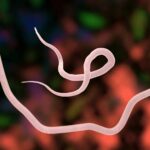
Next, the team discovered that a strain of Aeromonas bacteria—which they named MTB for “macrophage-toxic bacteria”—produces aerolysin. This strain is frequently present in people with ulcerative colitis, the researchers found.
Disease driver
Further experiments showed that MTB could colonize the mice gut only when the gut environment had been disrupted by antibiotics or mild chemical irritant. Once established in the gut, the microbe could reappear under certain conditions.
In mice with disrupted gut conditions, MTB colonized their guts, reduced protective macrophages, and triggered symptoms similar to human ulcerative colitis—including weight loss, bleeding, and tissue damage. Deleting aerolysin or neutralizing it with antibodies prevented macrophage loss and gut inflammation.
“Our findings point to two potential therapeutic approaches: eradication of MTB through antimicrobial therapy and targeted neutralization of aerolysin activity for both prevention and treatment of [ulcerative colitis],” the authors say.
 Latest related content