Gut bacteria usually support digestion and gut health, but they can become harmful if conditions change. Now, a study in mice shows that HMGB1, a protein released by intestinal cells into colonic mucus, prevents bacterial adhesion and virulence.
The findings, published in Cell Host & Microbe, suggest that HMGB1 protects intestinal cells and helps to maintain a healthy microbiota.
A protective mucus layer in the colon keeps gut microbes away from gut cells and helps prevent inflammation. HMGB1 typically helps gut cells cope with stress, but its role in normal mucus-based gut defense has been unclear.
So, Anne-Marie Overstreet at Cleveland Clinic in Ohio and her colleagues set out to investigate the role of HMGB1 in protecting the gut.
Keeping commensal bacteria
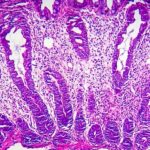
The researchers found that HMGB1, which is typically present in the cells lining the colon, is also present in the mucus layer that cover the colon in healthy people. In people with ulcerative colitis, HMGB1 was reduced or missing in the mucus, especially in areas with severe inflammation.
Experiment in mice showed that HMGB1 is made by intestinal cells and released into colonic mucus in response to signals from gut bacteria. Mice lacking HMGB1 in gut cells had little to no HMGB1 in their mucus, and mice without gut bacteria had HMGB1 stuck inside their cells rather than released.
In mice lacking HMGB1 in gut cells, the researchers also found that bacteria moved closer to the gut lining and were more likely to invade it. HMGB1 appears to clump bacteria together and block their attachment to the gut lining, preventing invasion and epithelial cell damage. HMGB1 also suppresses bacterial virulence, keeping normally harmless gut microbes in a commensal state, the researchers found.
Antibacterial strategies
In Escherichia coli, HMGB1 binds to the bacterial adhesin FimH—a protein used to stick to host cells. Further analyses revealed that HMGB1 binds to a specific part of FimH called ToH1, preventing E. coli from attaching to various types of cells, including gut cells. Mutating ToH1 reduced bacterial adhesion, and when HMGB1 was missing from intestinal cells, the gut lining was more vulnerable.
In colon tissue from people with ulcerative colitis, the researchers found more bacteria expressing the adhesin FimH compared with tissue from healthy people. Computer modeling confirmed that as HMGB1 decreases, FimH-expressing bacteria increase.
This result indicates that ulcerative colitis is associated with a failure of the HMGB1 defense system, allowing harmful bacteria to stick to and invade gut tissue, the authors say. Together, they add, the findings “suggest that ToH1 functions as a microbial virulence determinant and may serve as a target for developing antibacterial strategies that precisely target virulent bacteria.”
 Latest related content