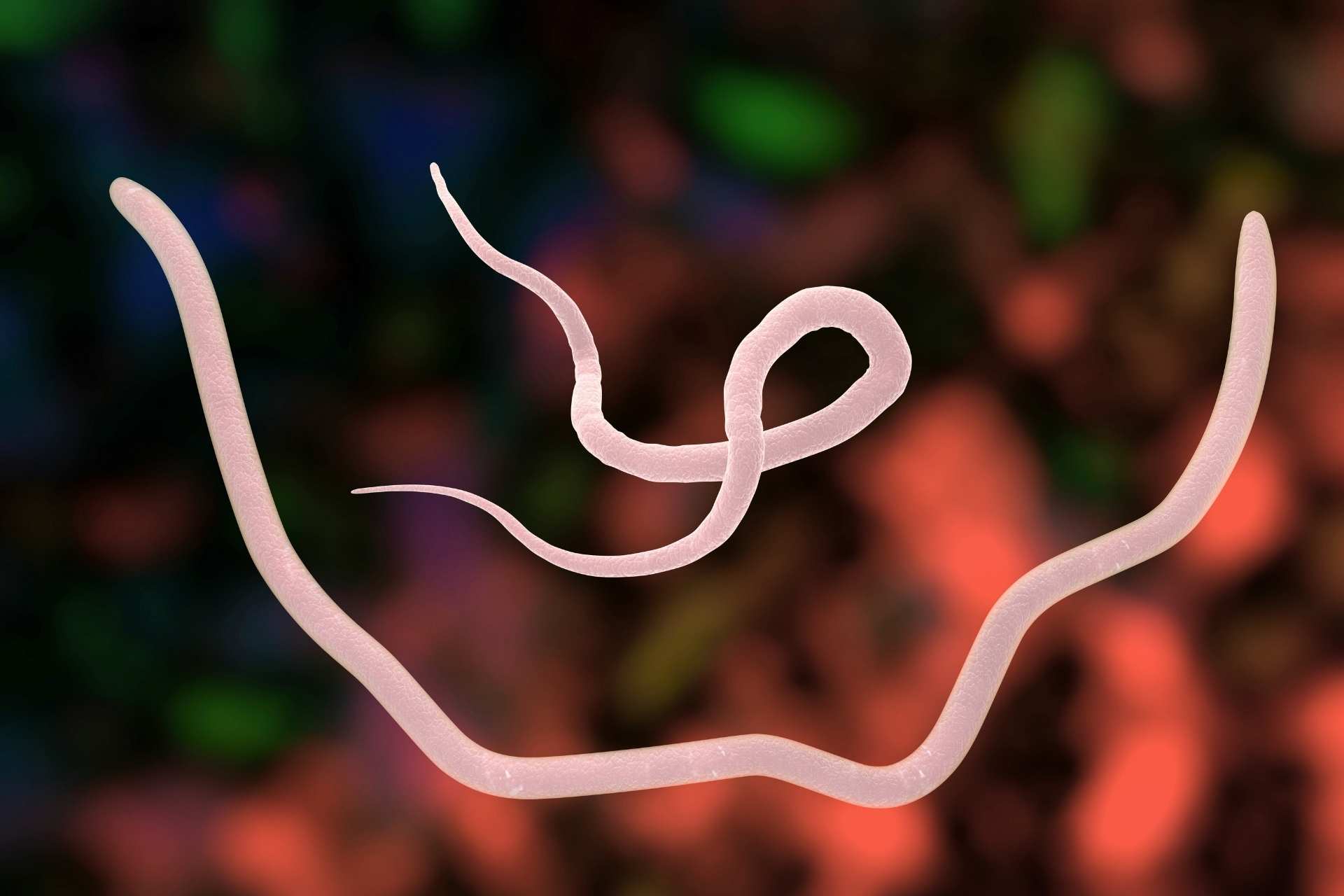
Helminths are parasitic worms that can live in the gut for long periods, often reshaping the immune system and the microbiota. Now, researcher have found that exposing pregnant mice to helminths changed their gut microbiota in a way that produced a molecule called IPA, which helped their pups’ lung cells fight off respiratory viruses.
The findings, published in Cell Host & Microbe, suggest that microbiota-derived molecules such as IPA may offer a way to strengthen early-life immunity against respiratory viruses.
Modern sanitation have removed these worms from many societies, but it’s unclear what immune functions may have been lost along the way. Because mothers pass microbes and immune signals to their offspring during pregnancy and early life, Krist Antunes Fernandes at Princeton University in New Jersey and her colleagues tested whether infecting female mice with helminths before pregnancy could influence their pups’ immune responses against respiratory viruses.
Beneficial molecule
Pups of infected mothers did not inherit the worms, but they were better protected against viruses such as influenza. The pups’ lung cells had higher activity in antiviral genes, and when exposed to respiratory viruses, these animals lost less weight, had lower viral levels in their lungs, less inflammation, and survived severe infection more often than pups born to uninfected mothers.
The protective effect did not depend on maternal antibodies, but on the mothers’ microbiota, the researchers found.
The mothers’ microbiota produced several beneficial molecules, including indole-3-propionic acid, or IPA, which activated antiviral responses in lung cells. The pups’ microbiota also had more bacteria capable of making indole-related metabolites, including Lactobacillus, Bifidobacterium, and Clostridium bacteria.
Antiviral protection
Giving newborn mice IPA alone increased antiviral gene activity in lung cells. When these mice were later infected with RSV or influenza A, they lost less weight, had lower viral loads, showed less lung inflammation, and survived severe infection more often than untreated controls. IPA also boosted antiviral responses in human airway cells grown in a lab dish.
What’s more, helminth-colonized Indigenous communities in Malaysia have gut bacteria with more capacity to process tryptophan into immune-shaping molecules such as IPA than urban Malaysians communities, the researchers found.
“This work uncovers the importance of maternal helminth-driven trans-kingdom crosstalk across generations and highlights microbial metabolites as actionable strategies to strengthen antiviral defense,” the authors say.
 Latest related content