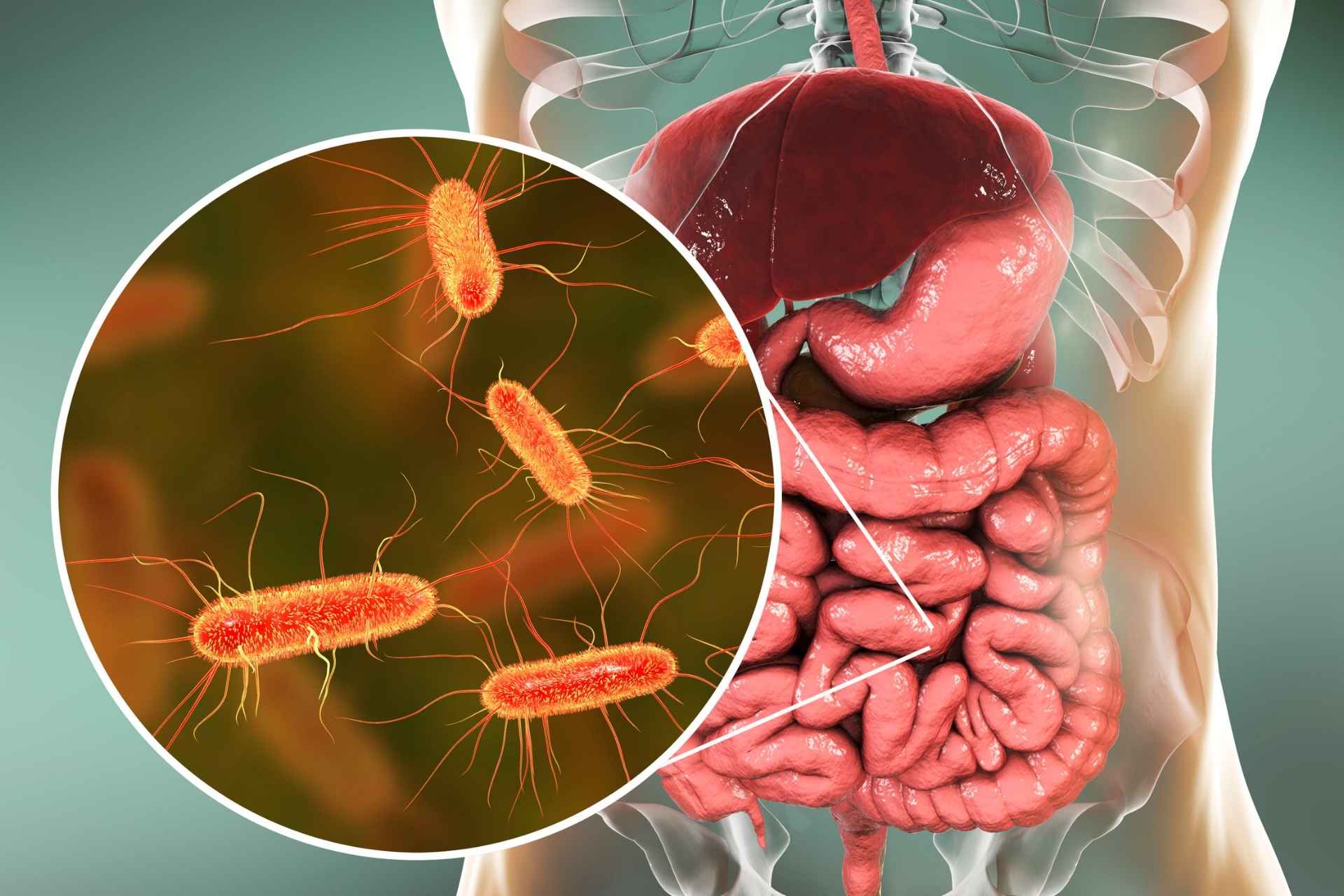
B. luti plays a crucial role in maintaining gut homeostasis, microbial electron transfer and gut health by producing beneficial metabolites and regulating formate and hydrogen levels.
A study, published in Gut Microbes, investigates the metabolism of Blautia luti, a gut acetogen lacking formate dehydrogenase, highlighting the role of formate as a central electron carrier in the gut.
The human gut microbiome significantly impacts health and disease. The genus Blautia is associated with human well-being due to its production of short-chain fatty acids, succinate, and antibacterial activity. Blautia species are acetogenic bacteria that use the Wood–Ljungdahl pathway (WLP) to produce acetate and energy (ATP). Blautia strains with an unusual WLP lacking formate dehydrogenase have been identified, and this study investigates the physiology of B. luti.
Sugar Fermentation
B. luti relies on various sugars, even if growth and fermentation profiles have not been documented, yet.
- Complete glucose consumption was noted at the end of fermentation, producing major byproducts: acetate, succinate, lactate, and formate, along with minor hydrogen production.
- When tested with other sugars (xylose, arabinose, sucrose, trehalose, maltose, raffinose), acetate remained the major end product, followed by succinate, lactate, and formate; small amounts of hydrogen were also produced.
- Growth on sorbitol resulted in nearly equal production of acetate and succinate, achieving the highest succinate yield per hexose, producing also lactate, formate, and hydrogen as fermentation end products.
- B. luti requires CO2/KHCO3 for growth
Formate as a central metabolite
B. luti does not have a formate dehydrogenase-encoding gene, but formate can be fed into the WLP directly. So, how is formate produced during growth on all the sugars tested?
- B. luti showed two copies of a pyruvate-formate lyase (PFL)-encoding gene for formate production. Indeed, the inhibition of PFL during glucose fermentation reduced growth rate and eliminated formate production. Additionally, the production of acetate was reduced, lactate was the major fermentation end product, and succinate production was only slightly decreased.
- Similar inhibition effects observed during maltose and sorbitol fermentation; the major product shifted to lactate.
Hence, PFL looks to be essential for pyruvate oxidation in B. luti’s heterotrophic growth, as its inhibition redirects metabolism. On the other hand, the production of lactate increases when formate production is inhibited, with active pathways involving pyruvate-ferredoxin-oxidoreductase (PFOR).
Enzyme Activities
The activities of PFL and PFOR were then measured in crude extracts of B. luti grown on glucose, confirming their activity in the presence of CoA. Moreover:
- Pyruvate can be metabolised by PFL for acetyl-CoA and formate production, by PFOR for acetyl-CoA and reduced ferredoxin production, and by lactate dehydrogenase for lactate production.
- The addition of Na+-phosphinate inhibited PFL activity and caused a switch in metabolism to lactate production, especially during growth on sorbitol, which also enhanced PFOR activity compared to glucose and maltose.
- The NADH-dependent lactate dehydrogenase activity remained unaffected by Na+-phosphinate across different substrates.
- The pathways for succinate production in B. luti were explored, confirming pathways via PEP carboxykinase and decarboxylating malate dehydrogenase.
- Activities of fumarate reductase were higher in extracts from cells grown on maltose or sorbitol.
- Na+-phosphinate reduced malate dehydrogenase activity in glucose-grown cells but increased it in sorbitol-grown cells, indicating potential alternative electron sinks during fermentation.
- hydrogen:MV-oxidoreductase activity in B. luti was low compared to other acetogens, and hydrogen production decreased in the presence of Na+-phosphinate.
- The metabolic switching from PFL and PFOR towards lactate production offers an alternative electron sink, suggesting a potential energetic advantage under specific growth conditions.
Overall, PFL is central to the heterotrophic metabolism of B. luti, particularly in conditions lacking formate dehydrogenases.
The researchers also investigated the carbon flow during glucose fermentation in the absence of biomass production showing:
- Cells fermented glucose into acetate, succinate, formate, and hydrogen. Only trace lactate was produced.
- Resting cells of B. luti required CO2/KHCO3 for glucose fermentation, indicating CO2’s essential role in the process.
- Glucose fermentation in the presence of 20% CO showed that acetate levels increased significantly.
- Formate production occurred initially, followed by complete consumption, and no hydrogen produced.
- When incubated under hydrogen + CO2, acetate production rose, with formate also initially produced but later consumed.
The findings suggest mixotrophic conditions in the gut colon, where formate functions as an electron carrier among bacterial species.
Hydrogenases of B. luti
Resting cells of B. luti utilized hydrogen as an electron donor, and growing cells produced hydrogen as a fermentation end product. So, the study further investigated the types of hydrogenases present in B. luti.
- The genome of B. luti contains two hydrogenase-encoding genes: hydA and hydM, located near each other.
- Gene hydA is part of a cluster with hydB and hydC, resembling one found in Acetobacterium woodii, showing 41% to 57% amino acid identity. Conserved binding motifs for cofactors in A. woodii’s hydrogenases are also found in B. luti.
- In contrast, hydM is not associated with other genes and is speculated to encode a group B [FeFe]-hydrogenase based on its structural features, including sequence motifs for four 4Fe-4S clusters and one H-cluster.
- HydM shares a 36% amino acid identity with the corresponding [FeFe]-hydrogenase in B. fragilis but is structurally similar, maintaining two globular domains and typical cluster arrangements.
- Group B [FeFe]-hydrogenases, including HydM, are hypothesised to produce hydrogen using reduced ferredoxin as an electron donor.
- HydM is also identified in several Blautia species, with amino acid identities ranging from 71.9% to 99.8%.
Reconstruction of the glucose fermentation pathway
To discover which hydrogenase B. luti uses during growth on glucose, the study analysed transcript abundance of hydA and hydM.
- As a control, the fumarate reductase gene (frdAB) was amplified, correlating with the production of succinate during growth on glucose.
- hydM was expressed at low levels, while hydA showed no expression, indicating relatively low hydrogen production activity in extract of B. luti.
In conclusion…
This study elucidated new features in the physiology of the genus Blautia, focusing on the species lacking formate dehydrogenase. These bacteria play a crucial role in gut health through carbohydrate fermentation and the production of short-chain fatty acids such as acetate, lactate, and succinate, alongside moderate amounts of formate and hydrogen, which are key metabolites for gut cross-feeding. Furthermore, Blautia species may help prevent the accumulation of toxic substances like formate, CO, or hydrogen in the gut, highlighting their association with human well-being.
 Latest related content