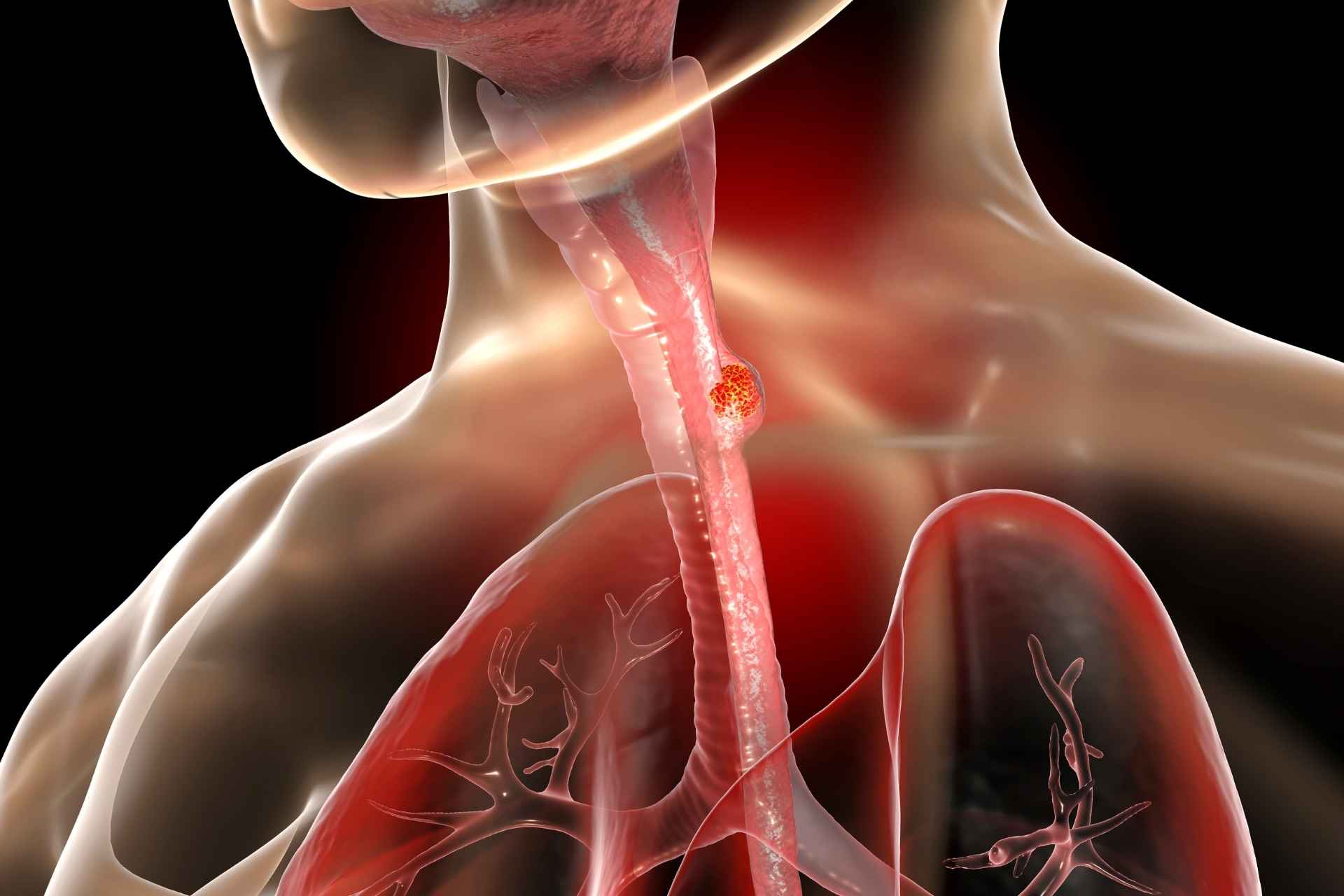
Esophageal cancer is common and deadly, and although immunotherapy has improved treatment, it only works well for a minority of patients. Now, researchers have found that the gut bacterium Lactobacillus salivarius can make cancer immunotherapy less effective by producing a molecule that weakens the body’s anti-tumor immune response.
The findings, published in Cell Host & Microbe, suggest that gut bacteria can influence the effectiveness of cancer treatment for esophageal cancer.
Previous studies have shown that certain gut bacteria can either help or hinder the immune system, altering how treatments work. However, little is known about whether the bacteria in a person’s gut can influence how well the immune system responds to cancer treatment.
So, researchers led by Jianfeng Zhou at Sichuan University in China set out to study whether the gut microbiota could explain why some people with esophageal cancer do not respond to immunotherapy.
Weakened immunity
The team analyzed stool samples from dozens of people with esophageal cancer and found that those who did not respond to immunotherapy had higher levels of the gut bacterium L. salivarius, while those who responded to therapy had more diverse gut bacteria.
To test whether L. salivarius can cause treatment resistance, the researchers used mice implanted with human-like tumors. When mice were given L. salivarius or gut bacteria from non-responders, the treatment became less effective.
Further experiments showed that L. salivarius produces a molecule called indole-3-lactic acid (ILA), which weakens key immune cells that typically attack tumors. High levels of ILA were found in people and mice with poor treatment responses.
Immunotherapy resistance
In mice, adding L. salivarius or ILA reduced the effectiveness of immunotherapy, whereas removing ILA restored it. By examining individual tumor cells, the researchers found that ILA activates a receptor in immune cells that shuts down a signaling pathway needed for the cells to stay active and kill cancer cells.
The findings suggest that L. salivarius and its product ILA create an environment where immune cells become ineffective, leading to resistance to immunotherapy, the researchers say.
The results, they add, “not only deepen our understanding of the relationship between gut microbiome and tumor immunity but also suggest that microbial modulation or metabolic intervention strategies could provide personalized treatment options for patients with esophageal cancer in the future.”
 Latest related content